
Granito estas speco de magmata roko elminita pro sia ekstrema forto, denseco, daŭreco kaj rezisto al korodo. Sed granito ankaŭ estas tre multflanka - ĝi ne nur taŭgas por kvadratoj kaj ortanguloj! Fakte, ni memfide laboras kun granitaj komponantoj realigitaj en formoj, anguloj kaj kurboj de ĉiuj varioj regule - kun bonegaj rezultoj.
Per nia pintnivela prilaborado, tranĉitaj surfacoj povas esti escepte ebenaj. Ĉi tiuj kvalitoj faras graniton la ideala materialo por krei laŭmendajn kaj laŭmendajn maŝinbazojn kaj metrologiajn komponantojn. Granito estas:
■ maŝinebla
■ precize plata post tranĉo kaj finpretigo
■ rustorezistema
■ daŭrema
■ longdaŭra
Granitaj komponantoj ankaŭ estas facile purigeblaj. Kiam vi kreas kutimajn dezajnojn, nepre elektu graniton pro ĝiaj superaj avantaĝoj.
NORMOJ / APLIKOJ DE ALTA ELUZO
La granito uzata de ZHHIMG por niaj normaj surfacplataj produktoj havas altan kvarcan enhavon, kiu provizas pli grandan reziston al eluziĝo kaj difekto. Niaj Superaj Nigraj koloroj havas malaltajn akvoabsorbajn indicojn, minimumigante la eblecon, ke viaj precizaj mezuriloj rustos dum fiksado sur la platoj. La koloroj de granito ofertitaj de ZHHIMG rezultas en malpli da brilego, kio signifas malpli da okulstreĉo por individuoj uzantaj la platojn. Ni elektis niajn granittipojn konsiderante termikan disvastiĝon por minimumigi ĉi tiun aspekton.
PROPRAJ APLIKOJ
Kiam via apliko postulas platon kun specialaj formoj, ŝraŭbitaj enigaĵoj, fendoj aŭ alia maŝinado, vi volos elekti materialon kiel Nigra Jinano. Ĉi tiu natura materialo ofertas superan rigidecon, bonegan vibrad-dampigon kaj plibonigitan maŝineblon.
Gravas noti, ke koloro sole ne indikas la fizikajn kvalitojn de la ŝtono. Ĝenerale, la koloro de granito estas rekte rilata al la ĉeesto aŭ foresto de mineraloj, kiuj eble ne influas la kvalitojn, kiuj faras bonan materialon por surfacplatoj. Ekzistas rozkoloraj, grizaj kaj nigraj granitoj, kiuj estas bonegaj por surfacplatoj, same kiel nigraj, grizaj kaj rozkoloraj granitoj, kiuj tute ne taŭgas por precizaj aplikoj. La kritikaj karakterizaĵoj de granito, rilate al ĝia uzo kiel materialo por surfacplatoj, havas nenion komunan kun koloro, kaj estas jenaj:
■ Rigideco (flekso sub ŝarĝo - indikita per Elastikmodulo)
■ Malmoleco
■ Denseco
■ Eluziĝrezisto
■ Stabileco
■ Poreco
Ni testis multajn granitajn materialojn kaj komparis ilin. Fine ni ricevis la rezulton, ke la nigra granito de Jinan estas la plej bona materialo, kiun ni iam konis. La hinda nigra granito kaj la sudafrika granito similas al la nigra granito de Jinan, sed iliaj fizikaj ecoj estas malpli bonaj ol tiuj de la nigra granito de Jinan. ZHHIMG daŭre serĉos pliajn granitajn materialojn en la mondo kaj komparos iliajn fizikajn ecojn.
Por pliaj informoj pri la granito taŭga por via projekto, bonvolu kontakti nin.info@zhhimg.com.
Malsamaj fabrikantoj uzas malsamajn normojn. Ekzistas multaj normoj en la mondo.
DIN-Normo, ASME B89.3.7-2013 aŭ Federacia Specifo GGG-P-463c (Granitaj Surfaco-Plataĵoj) kaj tiel plu kiel bazo por iliaj specifoj.
Kaj ni povas fabriki granitajn precizajn inspektplatojn laŭ viaj postuloj. Bonvolu kontakti nin se vi volas scii pliajn informojn pri pliaj normoj.
Plateco povas esti konsiderata kiel ĉiuj punktoj sur la surfaco enhavitaj ene de du paralelaj ebenoj, la baza ebeno kaj la tegmenta ebeno. La mezuro de distanco inter la ebenoj estas la totala plateco de la surfaco. Ĉi tiu plateca mezuro kutime portas toleremon kaj povas inkluzivi gradon.
Ekzemple, la platecaj tolerancoj por tri normaj gradoj estas difinitaj en la federacia specifo kiel determinite per la sekva formulo:
■ Laboratoria Grado AA = (40 + diagonale kvadrate/25) x 0,000001" (unupartia)
■ Inspekta Grado A = Laboratoria Grado AA x 2
■ Ilejo Grado B = Laboratoria Grado AA x 4.
Por normaj grandaj surfacoplatoj, ni garantias platecajn toleremojn, kiuj superas la postulojn de ĉi tiu specifo. Aldone al plateco, ASME B89.3.7-2013 kaj Federacia Specifo GGG-P-463c traktas temojn inkluzive de: ripetmezura precizeco, materialaj ecoj de surfacoplatgranitoj, surfacofinpoluro, subtenpunkta lokigo, rigideco, akcepteblaj inspektaj metodoj, instalado de surfadenigitaj enigaĵoj, ktp.
Granitaj surfacoplatoj kaj granitaj inspektplatoj de ZHHIMG plenumas aŭ superas ĉiujn postulojn difinitajn en ĉi tiu specifo. Nuntempe ne ekzistas difina specifo por granitaj angulplatoj, paraleloj aŭ majstraj kvadratoj.
Kaj vi povas trovi la formulojn por aliaj normoj enELŜUTU.
Unue, gravas teni la platon pura. Aera abrazia polvo kutime estas la plej granda fonto de eluziĝo sur plato, ĉar ĝi emas enprofundiĝi en laborpecojn kaj la kontaktajn surfacojn de mezuriloj. Due, kovru vian platon por protekti ĝin kontraŭ polvo kaj difekto. La eluziĝdaŭro povas esti plilongigita per kovrado de la plato kiam ne uzata, per perioda rotacio de la plato por ke ununura areo ne ricevu troan uzon, kaj per anstataŭigo de ŝtalaj kontaktaj kusenetoj sur mezuriloj per karbidaj kusenetoj. Ankaŭ evitu meti manĝaĵojn aŭ nealkoholaĵojn sur la platon. Notu, ke multaj nealkoholaĵoj enhavas aŭ karbonatan aŭ fosforan acidon, kiu povas dissolvi la pli molajn mineralojn kaj lasi malgrandajn kavaĵojn sur la surfaco.
Tio dependas de kiel la plato estas uzata. Se eble, ni rekomendas purigi la platon komence de la tago (aŭ laborŝanĝo) kaj denove fine. Se la plato malpuriĝas, precipe per oleaj aŭ gluecaj fluidoj, ĝi verŝajne devus esti purigita tuj.
Purigu la platon regule per likva aŭ senakva purigilo por surfacoplatoj de ZHHIMG. La elekto de purigaj solvoj estas grava. Se oni uzas volatilan solvilon (acetono, lakodiluilo, alkoholo, ktp.), la vaporiĝo malvarmigos la surfacon kaj distordos ĝin. En ĉi tiu kazo, necesas lasi la platon normaligi antaŭ ol uzi ĝin, alie okazos mezureraroj.
La kvanto da tempo bezonata por normaligi la platon varios laŭ la grandeco de la plato kaj la kvanto de malvarmigo. Unu horo devus sufiĉi por pli malgrandaj platoj. Du horoj povas esti necesaj por pli grandaj platoj. Se akvobazita purigilo estas uzata, ankaŭ estos iom da vaporiĝa malvarmigo.
La plato ankaŭ retenos la akvon, kaj tio povus kaŭzi ruston de metalaj partoj en kontakto kun la surfaco. Iuj purigiloj ankaŭ lasos gluecan restaĵon post sekiĝo, kiu altiros aeran polvon, kaj fakte pliigos eluziĝon, anstataŭ malpliigi ĝin.
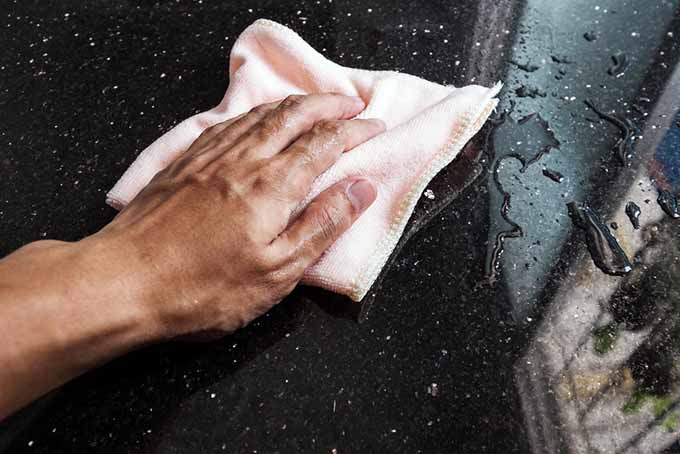
Tio dependas de la uzado kaj ĉirkaŭaĵo de la plato. Ni rekomendas, ke nova plato aŭ preciza granita akcesoraĵo ricevu plenan rekalibradon ene de unu jaro post la aĉeto. Se la granita surfaco-plato estos uzata intense, povas esti konsilinde mallongigi ĉi tiun intervalon al ses monatoj. Monata inspektado por ripetaj mezureraroj uzante elektronikan nivelon aŭ similan aparaton montros iujn ajn evoluantajn eluziĝajn makulojn kaj daŭras nur kelkajn minutojn. Post kiam la rezultoj de la unua rekalibrado estas determinitaj, la kalibra intervalo povas esti plilongigita aŭ mallongigita laŭ la permesitaj aŭ postulataj de via interna kvalitsistemo.
Ni povas oferti servon por helpi vin inspekti kaj kalibri vian granitan surfacplaton.

Ekzistas pluraj eblaj kaŭzoj por varioj inter kalibradoj:
- La surfaco estis lavita per varma aŭ malvarma solvaĵo antaŭ la kalibrado, kaj ne ricevis sufiĉan tempon por normaligi.
- La plato estas neĝuste subtenata
- Temperaturŝanĝo
- Skizoj
- Rekta sunlumo aŭ alia radianta varmo sur la surfaco de la plato. Certigu, ke la supra lumo ne varmigas la surfacon.
- Varioj en la vertikala temperaturgradiento inter vintro kaj somero (Se eble, sciu la vertikalan gradientan temperaturon dum la kalibrado estas farita.)
- La plato ne ricevis sufiĉan tempon por normaligi post sendo
- Netaŭga uzo de inspekta ekipaĵo aŭ uzo de nekalibrita ekipaĵo
- Surfaca ŝanĝo rezultanta el eluziĝo
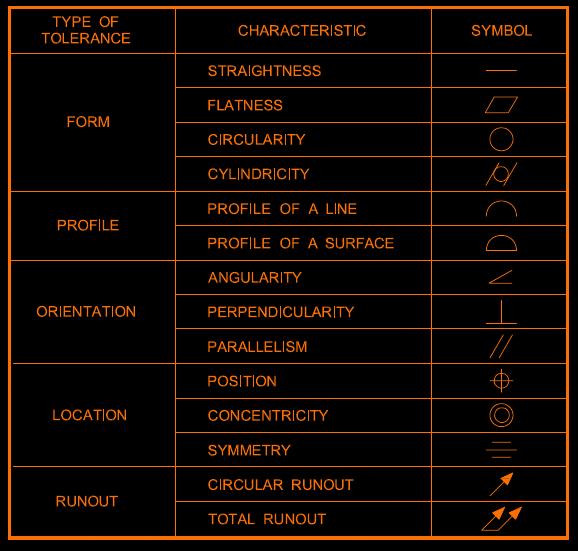
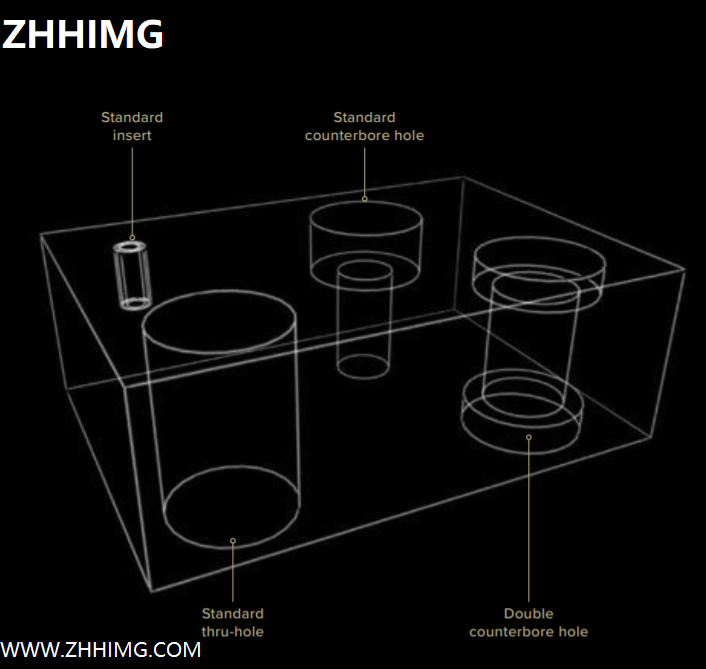
Kiom da specoj de truoj estas sur preciza granito?
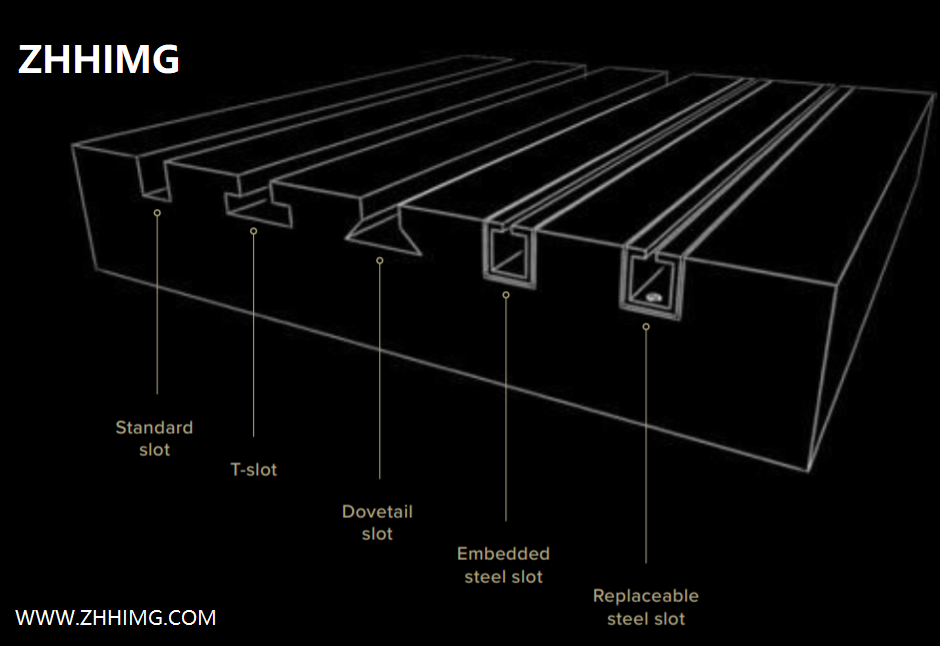
Fendoj sur Precizaj Granitaj Komponantoj
Por multaj fabrikoj, inspektejoj kaj laboratorioj, precizaj granitaj surfacoplatoj estas uzataj kiel bazo por preciza mezurado. Ĉar ĉiu lineara mezurado dependas de preciza referenca surfaco, de kiu finaj dimensioj estas prenitaj, surfacoplatoj provizas la plej bonan referencan ebenon por laborinspektado kaj aranĝo antaŭ maŝinado. Ili ankaŭ estas idealaj bazoj por fari altecmezuradojn kaj mezuri surfacojn. Plue, alta grado de plateco, stabileco, ĝenerala kvalito kaj metiisteco igas ilin bona elekto por muntado de sofistikaj mekanikaj, elektronikaj kaj optikaj mezursistemoj. Por iu ajn el ĉi tiuj mezurprocezoj, estas nepre teni la surfacoplatojn kalibritaj.
Ripetmezuradoj kaj Plateco
Kaj plateco kaj ripetaj mezuradoj estas kritikaj por certigi precizan surfacon. Plateco povas esti konsiderata kiel ĉiuj punktoj sur la surfaco enhavitaj ene de du paralelaj ebenoj, la baza ebeno kaj la tegmenta ebeno. La mezuro de distanco inter la ebenoj estas la totala plateco de la surfaco. Ĉi tiu plateca mezuro kutime portas toleremon kaj povas inkluzivi gradon.
La platecaj tolerancoj por tri normaj gradoj estas difinitaj en la federacia specifo kiel determinite per la sekva formulo:
DIN-Normo, GB-Normo, ASME-Normo, JJS-normo... malsamaj landoj kun malsamaj standoj...
Aldone al plateco, ripeteblo devas esti certigita. Ripetmezurado estas mezurado de lokaj platecaj areoj. Ĝi estas mezurado prenita ie ajn sur la surfaco de plato, kiu ripetiĝos ene de la deklarita toleremo. Kontroli lokan arean platecon al pli strikta toleremo ol ĝenerala plateco garantias laŭpaŝan ŝanĝon en la surfaca plateca profilo, tiel minimumigante lokajn erarojn.
Por certigi, ke surfacoplato plenumas kaj la specifojn pri plateco kaj ripetmezurado, fabrikantoj de granitaj surfacoplatoj devus uzi la Federacian Specifon GGG-P-463c kiel bazon por siaj specifoj. Ĉi tiu normo traktas ripetmezuradan precizecon, materialajn ecojn de granito pri surfacoplatoj, surfacofinpoluron, subtenpunkton, rigidecon, akcepteblajn metodojn de inspektado kaj instaladon de surfadenigitaj enigaĵoj.
Kontrolante Platan Precizecon
Sekvante kelkajn simplajn gvidliniojn, investo en granitan surfacplaton devus daŭri multajn jarojn. Depende de la uzado de la plato, la laboreja medio kaj la bezonata precizeco, la ofteco de kontrolado de la precizeco de la surfacplato varias. Ĝenerala regulo estas, ke nova plato ricevu plenan rekalibradon ene de unu jaro post la aĉeto. Se la plato estas uzata ofte, estas konsilinde mallongigi ĉi tiun intervalon al ses monatoj.
Antaŭ ol surfacoplato eluziĝis preter la specifo por ĝenerala plateco, ĝi montros eluzitajn aŭ ondecajn fostojn. Monata inspektado por ripetmezuraj eraroj uzante ripetlegadan mezurilon identigos eluziĝajn punktojn. Ripetlegada mezurilo estas altpreciza instrumento, kiu detektas lokan eraron kaj povas esti montrata sur altpligrandiga elektronika amplifilo.
Efika inspekta programo devus inkluzivi regulajn kontrolojn per aŭtokolimatoro, provizante faktan kalibradon de la ĝenerala plateco spurebla al la Nacia Instituto de Normoj kaj Teknologio (NIST). Ampleksa kalibrado fare de la fabrikanto aŭ sendependa kompanio estas necesa de tempo al tempo.
Varioj Inter Kalibradoj
En iuj kazoj, ekzistas varioj inter la kalibradoj de surfacplatoj. Iafoje faktoroj kiel surfacŝanĝo rezultanta eluziĝo, malĝusta uzo de inspekta ekipaĵo aŭ uzo de nekalibrita ekipaĵo povas klarigi ĉi tiujn variojn. La du plej oftaj faktoroj, tamen, estas temperaturo kaj subteno.
Unu el la plej gravaj variabloj estas temperaturo. Ekzemple, la surfaco eble estis lavita per varma aŭ malvarma solvaĵo antaŭ la kalibrado kaj ne ricevis sufiĉan tempon por normaligi. Aliaj kaŭzoj de temperaturŝanĝo inkluzivas trablovojn de malvarma aŭ varma aero, rektan sunlumon, supran lumon aŭ aliajn fontojn de radianta varmo sur la surfaco de la plato.
Ankaŭ povas esti varioj en la vertikala temperaturgradiento inter vintro kaj somero. En iuj kazoj, la plato ne havas sufiĉan tempon por normaligi post sendo. Estas bona ideo registri la vertikalan gradientan temperaturon dum la kalibrado estas farita.
Alia ofta kaŭzo de vario en la kalibrado estas plato, kiu estas neĝuste subtenata. Surfacplato devus esti subtenata je tri punktoj, ideale situantaj 20% de la longo de la finoj de la plato. Du subtenoj devus esti situantaj 20% de la larĝo de la longaj flankoj, kaj la restanta subteno devus esti centrita.
Nur tri punktoj povas ripozi solide sur io ajn krom preciza surfaco. Provi subteni la platon je pli ol tri punktoj kaŭzos, ke la plato ricevos sian subtenon de diversaj kombinaĵoj de tri punktoj, kiuj ne estos la samaj tri punktoj sur kiuj ĝi estis subtenata dum produktado. Tio enkondukos erarojn dum la plato fleksiĝas por konformiĝi al la nova subtena aranĝo. Konsideru uzi ŝtalajn standojn kun subtenaj traboj desegnitaj por vicigi kun la ĝustaj subtenaj punktoj. Standoj por ĉi tiu celo estas ĝenerale haveblaj de la fabrikanto de la surfacoplato.
Se la plato estas konvene subtenata, preciza niveligo estas necesa nur se apliko tion specifas. Niveligo ne estas necesa por konservi la precizecon de konvene subtenata plato.
Plilongigu la Vivon de la Plato
Sekvi kelkajn gvidliniojn reduktos eluziĝon de granita surfaco-plato kaj finfine plilongigos ĝian vivon.
Unue, gravas teni la platon pura. Aera abrazia polvo kutime estas la plej granda fonto de eluziĝo sur plato, ĉar ĝi emas enprofundiĝi en laborpecojn kaj la kontaktajn surfacojn de mezuriloj.
Ankaŭ gravas kovri la platojn por protekti ilin kontraŭ polvo kaj difekto. Oni povas plilongigi la uzdaŭron kovrante la platon kiam ĝi ne estas uzata.
Turnu la platon periode por ke unuopa areo ne ricevu troan uzon. Ankaŭ, oni rekomendas anstataŭigi ŝtalajn kontaktajn kusenetojn sur la mezurado per karbidaj kusenetoj.
Evitu meti manĝaĵojn aŭ nealkoholaĵojn sur la teleron. Multaj nealkoholaĵoj enhavas aŭ karbonatan aŭ fosforan acidon, kiu povas dissolvi la pli molajn mineralojn kaj lasi malgrandajn kavetojn sur la surfaco.
Kie Refali
Kiam granita surfacoplato bezonas resurfacon, konsideru ĉu fari ĉi tiun servon surloke aŭ ĉe la kalibrada instalaĵo. Ĉiam estas preferinde relavi la platon en la fabriko aŭ ĉe dediĉita instalaĵo. Se tamen la plato ne estas tro eluzita, ĝenerale ene de 0.001 coloj de la bezonata toleremo, ĝi povas esti resurfacita surloke. Se plato estas eluzita ĝis la punkto, ke ĝi estas pli ol 0.001 colojn ekster la toleremo, aŭ se ĝi estas grave kavetita aŭ noĉita, tiam ĝi devus esti sendita al la fabriko por muelado antaŭ relavado.
Kalibrada instalaĵo havas la ekipaĵon kaj fabrikan agordon, kiuj provizas la optimumajn kondiĉojn por ĝusta kalibrado de plato kaj riparlaboro se necese.
Tre zorge oni elektu surlokan kalibran kaj surfac-kovrantan teknikiston. Petu akrediton kaj kontrolu, ke la ekipaĵo, kiun la teknikisto uzos, havas spureblan kalibradon. Sperto ankaŭ estas grava faktoro, ĉar necesas multaj jaroj por lerni kiel ĝuste laĉi precizan graniton.
Kritikaj mezuradoj komenciĝas per preciza granita surfacoplato kiel bazlinio. Certigante fidindan referencon per uzado de ĝuste kalibrita surfacoplato, fabrikantoj havas unu el la esencaj iloj por fidindaj mezuradoj kaj pli bonkvalitaj partoj.Q
Kontrollisto por Alĝustigaj Varioj
1. La surfaco estis lavita per varma aŭ malvarma solvaĵo antaŭ la kalibrado kaj ne oni lasis sufiĉan tempon por normaligi.
2. La plato estas neĝuste subtenata.
3. Temperaturŝanĝo.
4. Skizoj.
5. Rekta sunlumo aŭ alia radianta varmo sur la surfaco de la plato. Certigu, ke la supra lumo ne varmigas la surfacon.
6. Varioj en la vertikala temperaturgradiento inter vintro kaj somero. Se eble, sciu la vertikalan gradientan temperaturon dum la kalibrado estas farita.
7. La plato ne ricevis sufiĉan tempon por normaligi post sendo.
8. Netaŭga uzo de inspekta ekipaĵo aŭ uzo de nekalibrita ekipaĵo.
9. Surfaca ŝanĝo rezultanta el eluziĝo.
Teknikaj Konsiletoj
- Ĉar ĉiu lineara mezurado dependas de preciza referenca surfaco, de kiu oni prenas finajn dimensiojn, surfacaj platoj provizas la plej bonan referencan ebenon por laborinspektado kaj aranĝo antaŭ maŝinado.
- Kontroli lokan arean platecon laŭ pli strikta toleremo ol ĝenerala plateco garantias laŭpaŝan ŝanĝon en surfaca plateca profilo, tiel minimumigante lokajn erarojn.
- Efika inspekta programo devus inkluzivi regulajn kontrolojn per aŭtokolimatoro, provizante faktan kalibradon de la ĝenerala plateco spurebla al la Nacia Inspektada Aŭtoritato.
Inter la mineralaj partikloj kiuj konsistigas graniton, pli ol 90% estas feldspato kaj kvarco, el kiuj feldspato estas la plej multe. La feldspato ofte estas blanka, griza kaj karnoruĝa, kaj la kvarco estas plejparte senkolora aŭ grizeca blanka, kio konsistigas la bazan koloron de la granito. Feldspato kaj kvarco estas malmolaj mineraloj, kaj malfacilas movi ilin per ŝtala tranĉilo. Koncerne la malhelajn makulojn en la granito, ĉefe nigra glimo, ekzistas ankaŭ kelkaj aliaj mineraloj. Kvankam biotito estas relative mola, ĝia kapablo rezisti streson ne estas malforta, kaj samtempe ili estas en malgranda kvanto en granito, ofte malpli ol 10%. Ĉi tiu estas la materiala kondiĉo en kiu granito estas aparte forta.
Alia kialo, kial granito estas forta, estas ke ĝiaj mineralaj partikloj estas forte ligitaj unu al la alia kaj estas enigitaj unu en la alian. La poroj ofte konsistigas malpli ol 1% de la tuta volumeno de la roko. Tio donas al la granito la kapablon elteni fortajn premojn kaj ne estas facile penetrita de humideco.
Granitaj komponantoj estas faritaj el ŝtono sen rusto, acido- kaj alkalo-rezisto, bona eluziĝrezisto kaj longa servodaŭro, sen speciala prizorgado. Granitaj precizaj komponantoj estas plejparte uzataj en la prilaborado de la maŝinindustrio. Tial ili nomiĝas granitaj precizaj komponantoj aŭ granitaj komponantoj. La karakterizaĵoj de granitaj precizaj komponantoj estas baze la samaj kiel tiuj de granitaj platformoj. Enkonduko al prilaborado kaj mezurado de granitaj precizaj komponantoj: Preciza maŝinado kaj mikro-maŝinada teknologio estas gravaj disvolviĝaj direktoj de la maŝinfabrikada industrio, kaj ili fariĝis grava indikilo por mezuri altteknologian nivelon. La disvolviĝo de pintnivela teknologio kaj la defendindustrio estas neapartigebla de preciza maŝinado kaj mikro-maŝinada teknologio. Granitaj komponantoj povas esti glate glitigitaj en la mezurado, sen stagnado. Mezurado de laborsurfaco, ĝeneralaj gratvundoj ne influas la mezurprecizecon. Granitaj komponantoj devas esti desegnitaj kaj produktitaj laŭ la postuloj de la mendoflanko.
Aplika kampo:
Kiel ni ĉiuj scias, pli kaj pli da maŝinoj kaj ekipaĵoj elektas precizajn granitajn komponantojn.
Granitaj komponantoj estas uzataj por dinamika movado, liniaj motoroj, CMM, CNC, lasermaŝinoj...
bonvenon kontakti nin por pliaj informoj.
Granitaj mezuriloj kaj granitaj mekanikaj komponantoj estas faritaj el altkvalita nigra granito de Jinan. Pro ilia alta precizeco, longa daŭro, bona stabileco kaj korodrezisto, ili estas pli kaj pli uzataj en produkta inspektado de moderna industrio kaj tiaj sciencaj kampoj kiel mekanika aerospaca kaj scienca esplorado.
Avantaĝoj
---- Duoble pli malmola ol gisfero;
---- Minimumaj ŝanĝoj de dimensio ŝuldiĝas al ŝanĝoj de temperaturo;
---- Sen tordado, do ne estas interrompo de laboro;
---- Sen lapoj aŭ elstaraĵoj pro la fajna grena strukturo kaj sensignifa glueco, kiu certigas altan gradon de plateco dum longa servodaŭro kaj ne kaŭzas damaĝon al aliaj partoj aŭ instrumentoj;
---- Senproblema funkciado por uzo kun magnetaj materialoj;
---- Longa vivo kaj senrusta, rezultante en malaltaj bontenadokostoj.
La precizaj granitaj surfacplatoj estas precize lapitaj ĝis alta normo de plateco por atingi precizecon kaj estas uzataj kiel bazo por muntado de sofistikaj mekanikaj, elektronikaj kaj optikaj mezursistemoj.
Kelkaj el la unikaj trajtoj de la granita surfaco-plato:
Unuformeco en Malmoleco;
Preciza sub ŝarĝaj kondiĉoj;
Vibrada Absorbilo;
Facile purigebla;
Rezistema al envolvaĵoj;
Malalta Poreco;
Ne-Abrazia;
Ne-magneta
Avantaĝoj de Granita Surfaco-Plato
Unue, la roko post longa periodo de natura maljuniĝo, unuforma strukturo, minimuma koeficiento, la interna streĉo tute malaperas, ne deformiĝas, do la precizeco estas alta.
Due, ne estos gratvundoj, ne sub konstantaj temperaturkondiĉoj, je ĉambra temperaturo ankaŭ povas konservi la precizecon de temperaturmezurado.
Trie, ne magnetiĝo, mezurado povas esti glata movado, neniu knaranta sento, ne influita de humideco, la ebeno estas fiksita.
Kvare, la rigideco estas bona, la malmoleco estas alta, la abraziorezisto estas forta.
Kvin, ne timas acidon, alkalan likvan erozion, ne rustos, ne bezonas pentri oleon, ne facile gluiĝas mikropolvo, bontenado, facile konservebla, longa servodaŭro.
Kial elekti granitan bazon anstataŭ gisfera maŝinlito?
1. Granita maŝinbazo povas konservi pli altan precizecon ol gisfera maŝinbazo. Gisfera maŝinbazo estas facile influata de temperaturo kaj humideco, sed granita maŝinbazo ne;
2. Kun la sama grandeco de granita maŝinbazo kaj gisfera bazo, la granita maŝinbazo estas pli kostefika ol gisfero;
3. Speciala granita maŝinbazo estas pli facile finpretebla ol gisfera maŝinbazo.
Granitaj surfacoplatoj estas ŝlosilaj instrumentoj en inspektaj laboratorioj tra la tuta lando. La kalibrita, ekstreme plata surfaco de surfacoplato ebligas al inspektistoj uzi ilin kiel bazlinion por partaj inspektadoj kaj instrumenta kalibrado. Sen la stabileco provizita de surfacoplatoj, multaj el la strikte tolerataj partoj en diversaj teknologiaj kaj medicinaj kampoj estus multe pli malfacile, se ne neeble, fabriki ĝuste. Kompreneble, por uzi granitan surfacoblokon por kalibrigi kaj inspekti aliajn materialojn kaj ilojn, la precizeco de la granito mem devas esti taksita. Uzantoj povas kalibrigi granitan surfacoplaton por certigi ĝian precizecon.
Purigu la granitan surfacoplaton antaŭ la kalibrado. Verŝu malgrandan kvanton da surfacoplata purigilo sur puran, molan tukon kaj viŝu la surfacon de la granito. Tuj sekigu la purigilon de la surfacoplato per seka tuko. Ne lasu la purigilon aersekiĝi.
Metu ripetmezurilon sur la centron de la granita surfacplato.
Nuligu la ripetmezurilon al la surfaco de la granita plato.
Movu la mezurilon malrapide trans la surfacon de la granito. Observu la indikilon de la mezurilo kaj registru la pintojn de iuj ajn altecvarioj dum vi movas la instrumenton trans la platon.
Komparu la platecan varion trans la surfaco de la plato kun la tolerancoj por via surfaco-plato, kiu varias laŭ la grandeco de la plato kaj la plateca grado de la granito. Konsultu la federacian specifon GGG-P-463c (vidu Rimedojn) por determini ĉu via plato plenumas la platecajn postulojn por sia grandeco kaj grado. La vario inter la plej alta punkto sur la plato kaj la plej malalta punkto sur la plato estas ĝia plateca mezuro.
Kontrolu, ke la plej grandaj profundvarioj sur la surfaco de la plato falas ene de la ripeteblecaj specifoj por plato de tiu grandeco kaj grado. Konsultu la federacian specifon GGG-P-463c (vidu Rimedojn) por determini, ĉu via plato plenumas la ripeteblecajn postulojn por sia grandeco. Malakceptu la surfacoplaton se eĉ unuopa punkto malsukcesas ripeteblecajn postulojn.
Ĉesu uzi granitan surfacoplaton, kiu ne plenumas la federaciajn postulojn. Redonu la platon al la fabrikanto aŭ al granitsurfacfirmao por ke la bloko estu polurita laŭ la specifoj.
Konsileto
Faru formalajn kalibradojn almenaŭ unufoje jare, kvankam granitaj surfacplatoj spertantaj pezan uzon devus esti kalibritaj pli ofte.
Formala, registrebla kalibrado en fabrikadaj aŭ inspektaj medioj ofte estas farata de kvalitkontrolo aŭ ekstera kalibrada servovendisto, kvankam iu ajn povas uzi ripetmezurilon por neformale kontroli surfacplaton antaŭ uzo.
La Frua Historio de Granitaj Surfacplatoj
Antaŭ la Dua Mondmilito, fabrikantoj uzis ŝtalajn platojn por la dimensia inspektado de partoj. Dum la Dua Mondmilito la bezono de ŝtalo pliiĝis draste, kaj multaj ŝtalaj platoj estis fanditaj. Anstataŭaĵo estis necesa, kaj granito fariĝis la preferata materialo pro ĝiaj pli bonaj metrologiaj ecoj.
Pluraj avantaĝoj de granito super ŝtalo evidentiĝis. Granito estas pli malmola, kvankam pli fragila kaj sentema al fendado. Oni povas laĉi graniton ĝis multe pli granda plateco kaj pli rapide ol ŝtalo. Granito ankaŭ havas la dezirindan proprecon de pli malalta termika ekspansio kompare kun ŝtalo. Plue, se ŝtala plato bezonis riparon, ĝi devis esti mane skrapita de metiistoj, kiuj ankaŭ aplikis siajn kapablojn en riparado de maŝiniloj.
Kiel flanka noto, kelkaj ŝtalaj surfacplatoj ankoraŭ estas uzataj hodiaŭ.
Metrologiaj ecoj de granitaj platoj
Granito estas magma roko formita per vulkanaj erupcioj. Kompare, marmoro estas metamorfozita kalkŝtono. Por metrologia uzo, la elektita granito devas plenumi specifajn postulojn skizitajn en Federacia Specifo GGG-P-463c, de nun nomata Fed Specs, kaj specife, Parto 3.1 3.1 Inter la Fed Specs, granito devas havi fajnan ĝis mezgrajnan teksturon.
Granito estas malmola materialo, sed ĝia malmoleco varias pro pluraj kialoj. Sperta granitplatteknikisto povas taksi la malmolecon laŭ ĝia koloro, kiu indikas ĝian kvarcan enhavon. Granita malmoleco estas eco difinita parte per la kvanto de kvarca enhavo kaj la manko de glimo. La ruĝaj kaj rozkoloraj granitoj emas esti la plej malmolaj, la grizaj estas mezaj malmolecoj, kaj la nigraj estas la plej molaj.
La Elastikmodulo de Young estas uzata por esprimi la flekseblecon aŭ indikon pri la malmoleco de la ŝtono. Rozkolora granito averaĝe havas 3-5 poentojn sur la skalo, grizaj 5-7 poentojn kaj nigraj 7-10 poentojn. Ju pli malgranda la nombro, des pli malmola la granito tendencas esti. Ju pli granda la nombro, des pli mola kaj fleksebla estas la granito. Gravas scii la malmolecon de granito kiam oni elektas dikon bezonatan por tolerecaj gradoj kaj la pezon de partoj kaj mezuriloj metitaj sur ĝin.
En la malnovaj tempoj, kiam ekzistis veraj maŝinistoj, konataj per siaj broŝuroj pri trigonometriaj tabeloj en siaj ĉemizopoŝoj, nigra granito estis konsiderata "La Plej Bona". La Plej Bona difinita kiel la tipo, kiu donis la plej grandan reziston al eluziĝo aŭ estas pli malmola. Unu malavantaĝo estas, ke la pli malmolaj granitoj emas pli facile ĉiziĝi aŭ difektiĝi. Maŝinistoj estis tiel konvinkitaj, ke nigra granito estis la plej bona, ke kelkaj fabrikantoj de rozkolora granito tinkturis ilin nigre.
Mi persone atestis platon, kiu estis faligita de ĉarelo kiam ĝi estis movita el stokejo. La plato trafis la plankon kaj fendiĝis en du, rivelante la veran rozkoloran koloron. Estu singarda se vi planas aĉeti nigran graniton el Ĉinio. Ni rekomendas, ke vi malŝparu vian monon iel. Granita plato povas varii laŭ malmoleco en si mem. Strio de kvarco povas esti multe pli malmola ol la resto de la surfacplato. Tavolo de nigra gabro povas igi areon multe pli mola. Bone trejnitaj, spertaj teknikistoj pri riparo de surfacplatoj scias kiel pritrakti ĉi tiujn molajn areojn.
Surfacaj Plataj Karakterizaĵoj
Ekzistas kvar gradoj de surfacoplatoj. Laboratoria grado AA kaj A, Ĉambra Inspektada Grado B, kaj la kvara estas Laborrenkontiĝa Grado. La gradoj AA kaj A estas la plej plataj kun platecaj tolerancoj pli bonaj ol 0.00001 coloj por Grado AA-plato. Laborrenkontiĝaj gradoj estas la malplej plataj kaj, kiel la nomo sugestas, ili estas destinitaj por uzo en ilejoj. Dum Grado AA, Grado A kaj Grado B estas destinitaj por uzo en inspektada aŭ kvalitkontrola laboratorio.
Pŝnura Testado Por Surfacplata Kalibrado
Mi ĉiam diris al miaj klientoj, ke mi povas preni ajnan 10-jarulon el mia preĝejo kaj instrui al ili en nur kelkaj tagoj kiel testi teleron. Ĝi ne estas malfacila. Ĝi postulas iom da tekniko por plenumi la taskon rapide, teknikoj, kiujn oni lernas per tempo kaj multe da ripetado. Mi devus informi vin, kaj mi ne povas sufiĉe emfazi, ke Fed Spec GGG-P-463c NE ESTAS kalibrada proceduro! Pli pri tio poste.
Laŭ la Fed-specifoj, kalibrado de ĝenerala plateco (Meza Vitro) kaj ripeteblo (loka eluziĝo) estas nepra. La sola escepto al ĉi tio estas ĉe malgrandaj platoj, kie nur ripeteblo estas necesa.
Ankaŭ, kaj same kritika kiel la aliaj testoj, estas la testo por termikaj gradientoj. (Vidu Delta T sube)
Figuro 1
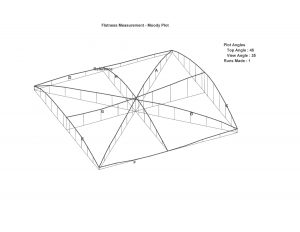
Platectestado havas 4 aprobitajn metodojn. Elektronikaj niveloj, aŭtokolimado, lasero kaj aparato konata kiel ebenlokigilo. Ni uzas nur elektronikajn nivelojn ĉar ili estas la plej preciza kaj rapida metodo pro pluraj kialoj.
Laseroj kaj aŭtokolimatoroj uzas tre rektan lumfaskon kiel referencon. Oni faras rektecmezuradon de granita surfacoplato komparante la varion en distanco inter la surfacoplato kaj la lumfasko. Prenante rektan lumfaskon, frapante ĝin sur reflektoran celon dum movante la reflektoran celon laŭ la surfacoplato, la distanco inter la elsendita fasko kaj la revena fasko estas rektecmezurado.
Jen la problemo kun ĉi tiu metodo. La celo kaj la fonto estas influitaj de vibrado, ĉirkaŭa temperaturo, malpli ol plata aŭ gratvundita celo, poluado en la aero, kaj aermovado (fluoj). Ĉio ĉi kontribuas al pliaj komponantoj de eraro. Krome, la kontribuo de funkciigista eraro de kontroloj per aŭtokolimatoro estas pli granda.
Sperta uzanto de aŭtokolimatoro povas fari tre precizajn mezuradojn, sed tamen alfrontas problemojn pri la kohereco de la legaĵoj, precipe trans pli longaj distancoj, ĉar la reflektoj emas plilarĝiĝi aŭ iomete malklariĝi. Ankaŭ, malpli ol perfekte plata celo kaj longa tago da rigardado tra la lenso produktas pliajn erarojn.
Aparato por lokalizi ebenon estas simple stulta. Ĉi tiu aparato uzas iom rektan (kompare kun ekstreme rekta kolimatita aŭ lasera lumfasko) kiel sian referencon. Ne nur la mekanika aparato uzas indikilon normale kun nur 20 µm-cola rezolucio, sed la nerekteco de la stango kaj malsamaj materialoj signife aldonas al mezureraroj. Laŭ nia opinio, kvankam la metodo estas akceptebla, neniu kompetenta laboratorio iam ajn uzus aparaton por lokalizi ebenon kiel finan inspektilon.
Elektronikaj niveloj uzas graviton kiel sian referencon. Diferencialaj elektronikaj niveloj ne estas influitaj de vibrado. Ili havas rezolucion de nur 0,1 arksekundoj kaj mezuradoj estas rapidaj, precizaj kaj estas tre malmulta kontribuo de eraroj fare de sperta funkciigisto. Nek ebenaj lokaliziloj nek aŭtokolimatoroj provizas komputile generitajn topografiajn (Figuro 1) aŭ izometriajn grafikaĵojn (Figuro 2) de la surfaco.
Figuro 2
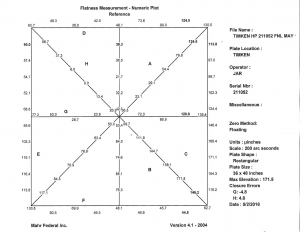
Testo de Taŭga Plateco de la Surfaco
Testo pri ĝusta plateco de la surfaco estas tiel grava parto de ĉi tiu artikolo, ke mi devus esti metinta ĝin komence. Kiel jam menciite, la Federacia Specifo GGG-p-463c NE ESTAS kalibrada metodo. Ĝi servas kiel gvidilo por multaj aspektoj de metrologia granito, kies celita aĉetanto estas iu ajn Federacia Registara Agentejo, kaj tio inkluzivas la testajn metodojn kaj toleremojn aŭ gradojn. Se entreprenisto asertas, ke li aliĝis al la Federaciaj Specifoj, tiam la plateca valoro estos determinita per la Moody-Metodo.
Moody estis ulo el la 50-aj jaroj, kiu elpensis matematikan metodon por determini la ĝeneralan platecon kaj konsideri la orientiĝon de testitaj linioj, ĉu ili estas sufiĉe proksimaj en la sama ebeno. Nenio ŝanĝiĝis. Allied Signal provis plibonigi la matematikan metodon, sed konkludis, ke la diferencoj estis tiel malgrandaj, ke ĝi ne valoris la penon.
Se entreprenisto de surfacplatoj uzas elektronikajn nivelojn aŭ laseron, li uzas komputilon por helpi sin kun la kalkuloj. Sen komputila helpo, la teknikisto uzanta aŭtokolimadon devas kalkuli la rezultojn permane. Fakte, ili ne faras tion. Ĝi daŭras tro longe kaj, sincere, povas esti tro malfacila. En platectesto uzanta la Moody-Metodon, la teknikisto testas ok liniojn en Union Jack-konfiguracio por rekteco.
La Malbonhumora Metodo
La Metodo Moody estas matematika maniero determini ĉu la ok linioj estas sur la sama ebeno. Alie, vi havas nur 8 rektajn liniojn, kiuj eble estas aŭ ne estas sur aŭ proksime al la sama ebeno. Plue, entreprenisto, kiu asertas sin konformiĝi al la Fed Spec, kaj uzas aŭtokolimadon, li...devasgeneri ok paĝojn da datumoj. Unu paĝo por ĉiu linio kontrolita por pruvi lian testadon, riparadon, aŭ ambaŭ. Alie, la entreprenisto tute ne scias, kia estas la reala plateca valoro.
Mi certas, ke se vi estas unu el tiuj, kies platoj estas kalibritaj de entreprenisto per aŭtokolimado, vi neniam vidis tiujn paĝojn! Figuro 3 estas ekzemplo denur unupaĝo el ok necesaj por kalkuli la ĝeneralan platecon. Unu indiko de tiu nescio kaj malico estas se via raporto havas belajn rondetajn nombrojn. Ekzemple, 200, 400, 650, ktp. Ĝuste kalkulita valoro estas reala nombro. Ekzemple 325.4 u In. Kiam la entreprenisto uzas la Moody-metodon de kalkuloj, kaj la teknikisto kalkulas la valorojn permane, vi devus ricevi ok paĝojn da kalkuloj kaj izometrian grafikaĵon. La izometria grafikaĵo montras la variajn altojn laŭlonge de la malsamaj linioj kaj kiom da distanco apartigas la elektitajn intersekcantajn punktojn.
Figuro 3(Ok paĝoj kiel ĉi tiu necesas por permane kalkuli platecon. Nepre demandu kial vi ne ricevas ĉi tion se via entreprenisto uzas aŭtokolimadon!)
Figuro 4
Teknikistoj pri Dimensiaj Mezuriloj uzas diferencigajn nivelojn (Figuro 4) kiel preferatajn aparatojn por mezuri la etajn ŝanĝojn en anguleco de mezurstacio al stacio. La niveloj havas rezolucion ĝis 0,1 arksekundoj (5 µ-coloj uzante 4″-sledon), estas ekstreme stabilaj, ne estas influitaj de vibrado, mezuritaj distancoj, aerfluoj, funkciigista laceco, aerpoluado aŭ iuj ajn problemoj enecaj en aliaj aparatoj. Aldonu komputilan helpon, kaj la tasko fariĝas relative rapida, generante topografiajn kaj izometriajn grafikaĵojn pruvantajn la konfirmon kaj plej grave la riparon.
Ĝusta Ripetebla Testo
Ripetlegado aŭ ripeteblo estas la plej grava testo. La ekipaĵo, kiun ni uzas por plenumi la ripeteblan teston, estas ripetlega aparato, LVDT kaj amplifilo necesa por alt-rezoluciaj legadoj. Ni agordas la LVDT-amplifilon al minimuma rezolucio de 10 µ coloj aŭ 5 µ coloj por alt-precizaj platoj.
Uzi mekanikan indikilon kun rezolucio de nur 20 µ-coloj estas senvalora se vi provas testi ripeteblan postulon de 35 µ-coloj. Indikiloj havas necertecon de 40 µ-coloj! La ripetlega aranĝo imitas altecmezurilon/pecan konfiguracion.
Ripeteblo NE ESTAS la sama kiel ĝenerala plateco (Meza ebeno). Mi ŝatas pensi pri ripeteblo en granito vidata kiel kohera radiusa mezuro.
Figuro 5
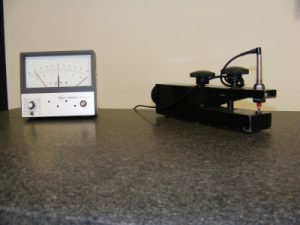
Se vi testas ripeteblon de ronda pilko, tiam vi pruvis, ke la radiuso de la pilko ne ŝanĝiĝis. (La ideala profilo de ĝuste riparita plato havas konveksan kronitan formon.) Tamen, estas evidente, ke la pilko ne estas plata. Nu, pli-malpli. Sur ekstreme mallonga distanco, ĝi estas plata. Ĉar la plimulto de inspektado implikas altecmezurilon tre proksime al la parto, ripeteblo fariĝas la plej kritika eco de granita plato. Estas pli grava ol la ĝenerala plateco, krom se uzanto kontrolas la rektecon de longa parto.
Certigu, ke via entreprenisto plenumas ripetlegadan teston. Plato povas havi ripetlegadon signife ekster la toleremo, sed tamen pasi platecan teston! Mirinde, laboratorio povas akiri akrediton por testado, kiu ne inkluzivas ripetlegadan teston. Laboratorio, kiu ne povas ripari aŭ ne estas tre bona riparado, preferas plenumi nur platecan testadon. Plateco malofte ŝanĝiĝas, krom se vi movas la platon.
Ripetlegada testado estas la plej facila por testi sed la plej malfacila por atingi dum lapado. Certigu, ke via entreprenisto povas restarigi ripeteblecon sen "disfali" la surfacon aŭ lasi ondojn sur la surfaco.
Delta T-testo
Ĉi tiu testo implikas mezuri la REALAN temperaturon de la ŝtono ĉe ĝia supra surfaco kaj ĝia malsupra surfaco kaj kalkuli la diferencon, Delta T, por raporti en la atestilo.
Gravas scii, ke la averaĝa koeficiento de termika ekspansio en granito estas 3.5 uIn/Colo/grado. La efiko de ĉirkaŭaj temperaturoj kaj humideco sur granita plato estas nekonsiderinda. Tamen, surfaco de plato povas eliri el toleremo aŭ foje pliboniĝi eĉ se ĝi estas je Delta T de 0.3 - 0.5 gradoj Fahrenheit. Necesas scii, ĉu la Delta T estas ene de 0.12 gradoj Fahrenheit de la diferenco kompare kun la lasta kalibrado.
Gravas ankaŭ scii, ke la laborsurfaco de plato migras al varmo. Se la supra temperaturo estas pli varma ol la malsupra, tiam la supra surfaco leviĝas. Se la malsupra estas pli varma, kio maloftas, tiam la supra surfaco sinkas. Ne sufiĉas por kvalitmanaĝero aŭ teknikisto scii, ke la plato estas plata kaj ripetebla dum la kalibrado aŭ riparo, sed kia estis ĝia Delta T dum la fina kalibrada testado. En kritikaj situacioj, uzanto povas, per mem mezurado de la Delta T, determini ĉu plato eliris el toleremo nur pro Delta T-varioj. Feliĉe, granito bezonas multajn horojn aŭ eĉ tagojn por alklimatiĝi al medio. Malgrandaj fluktuoj en ĉirkaŭa temperaturo dum la tago ne influos ĝin. Pro ĉi tiuj kialoj, ni ne raportas ĉirkaŭan kalibradajn temperaturon aŭ humidecon, ĉar la efikoj estas nekonsiderindaj.
Granita Plata Eluziĝo
Kvankam granito estas pli malmola ol ŝtalaj platoj, granito tamen evoluigas malaltaĵojn sur la surfaco. Ripetema movado de partoj kaj mezuriloj sur la surfaco de la plato estas la plej granda fonto de eluziĝo, precipe se la sama areo estas konstante uzata. Malpuraĵo kaj muelada polvo, kiuj restas sur la surfaco de plato, akcelas la eluziĝan procezon, ĉar ĝi eniras inter partojn aŭ mezurilojn kaj la granitan surfacon. Kiam oni movas partojn kaj mezurilojn trans ĝian surfacon, abrazia polvo kutime kaŭzas plian eluziĝon. Mi tre rekomendas konstantan purigadon por redukti eluziĝon. Ni vidis eluziĝon de platoj kaŭzitan de ĉiutagaj UPS-pakaĵliveroj metitaj sur platojn! Tiuj lokaj areoj de eluziĝo influas la ripeteblajn testojn de la kalibrado. Evitu eluziĝon per regula purigado.
Purigado de Granitaj Platoj
Por teni la platon pura, uzu glutukon por forigi gruzon. Nur premu tre malpeze, por ke vi ne lasu glurestaĵojn. Bone uzita glutuko bonege kolektas frotigan polvon inter purigadoj. Ne laboru en la sama loko. Movu vian aranĝon ĉirkaŭ la plato, distribuante la eluziĝon. Estas bone uzi alkoholon por purigi platon, sed atentu, ke fari tion provizore supermalvarmigos la surfacon. Akvo kun malgranda kvanto da sapo estas bonega. La komerce haveblaj purigiloj kiel ekzemple la purigilo de Starrett ankaŭ estas bonegaj por uzi, sed certigu, ke vi forigas ĉiujn saprestaĵojn de la surfaco.
Riparo de Granitaj Platoj
Jam devus esti evidente la graveco certigi, ke via entreprenisto por la surfacplato plenumas kompetentan kalibradon. La laboratorioj de la tipo "Clearing House", kiuj ofertas programojn "Faru ĉion per unu voko", malofte havas teknikiston, kiu povas fari riparojn. Eĉ se ili ofertas riparojn, ili ne ĉiam havas teknikiston, kiu havas la sperton bezonatan kiam la surfacplato estas signife ekster la toleremo.
Se oni diras al vi, ke plato ne estas riparebla pro ekstrema eluziĝo, telefonu al ni. Plej verŝajne ni povas fari la riparon.
Niaj teknikistoj laboras dum unu- ĝis unu-kaj-duonjara metilernado sub Majstra Teknikisto pri Surfacplato. Ni difinas Majstran Teknikiston pri Surfacplato kiel iun, kiu kompletigis sian metilernadon kaj havas pli ol dek jarojn da sperto en alĝustigo kaj riparo de surfacplatoj. Ĉe Dimensional Gauge, ni havas tri Majstrajn Teknikistojn en nia teamo kun pli ol 60-jara sperto kune. Unu el niaj Majstraj Teknikistoj estas disponebla ĉiam por subteno kaj gvido kiam malfacilaj situacioj ekestas. Ĉiuj niaj teknikistoj havas sperton pri alĝustigoj de surfacplatoj de ĉiuj grandecoj, de malgrandaj ĝis tre grandaj, diversaj mediaj kondiĉoj, malsamaj industrioj, kaj pri gravaj eluziĝaj problemoj.
Fed-specifoj havas specifan postulon pri finpoluro de 16 ĝis 64 Averaĝa Aritmetika Malglateco (AA). Ni preferas finpoluron en la intervalo de 30-35 AA. Estas ĝuste sufiĉe da malglateco por certigi, ke partoj kaj mezuriloj moviĝas glate kaj ne algluiĝas aŭ tordiĝas al la surfacoplato.
Kiam ni riparas, ni inspektas la platon por ĝusta muntado kaj ebeneco. Ni uzas sekan lapmetodon, sed en kazoj de ekstrema eluziĝo postulanta grandan forigon de granito, ni malsekan lapmetodon. Niaj teknikistoj purigas post si mem, ili estas detalemaj, rapidaj kaj precizaj. Tio gravas ĉar la kosto de servo por granitplatoj inkluzivas vian malfunkcitempon kaj perditan produktadon. Kompetenta riparo estas de plej alta graveco, kaj vi neniam elektu entrepreniston laŭ prezo aŭ oportuno. Iuj kalibraj laboroj postulas altkvalifikitajn individuojn. Ni havas tion.
Finaj Kalibraj Raportoj
Por ĉiu riparo kaj kalibrado de la surfacoplato, ni provizas detalajn profesiajn raportojn. Niaj raportoj enhavas signifan kvanton da kaj kritikaj kaj gravaj informoj. Fed Spec. postulas la plejparton de la informoj, kiujn ni provizis. Ekskludante tiujn enhavitajn en aliaj kvalitnormoj kiel ISO/IEC-17025, la minimumaj Fed Spec. por raportoj estas:
- Grandeco en futoj (X' x X')
- Koloro
- Stilo (Rilatas al neniuj krampaj kornicoj aŭ du aŭ kvar kornicoj)
- Taksa Modulo de Elastiko
- Averaĝa Ebena Toleremo (Determinita per Grado/Grandeco)
- Ripetlegada Toleremo (Determinita per diagonala longo en coloj)
- Meza ebeno kiel trovita
- Meza ebeno maldekstre
- Ripetu legadon kiel trovite
- Ripetu legadon kiel maldekstre
- Delta T (Temperaturdiferenco inter supra kaj malsupra surfacoj)
Se la teknikisto bezonas fari lapon aŭ riparlaboron al la surfacplato, tiam la atestilo pri alĝustigo estas akompanata de topografia aŭ izometria grafikaĵo por pruvi validan riparon.
Vorto Pri ISO/IEC-17025 Akreditoj kaj la laboratorioj kiuj havas ilin
Nur ĉar laboratorio havas akrediton pri kalibrado de surfacoplatoj ne nepre signifas, ke ili scias, kion ili faras, des malpli faras ĝin ĝuste! Nek ĝi nepre implicas, ke la laboratorio povas ripari. La akreditaj instancoj ne faras distingon inter konfirmo kaj kalibrado (riparo).Akaj mi konas unu, eble2akreditaj instancoj kiujLkravatoArubandon ĉirkaŭ mia hundo se mi pagus al ili sufiĉe da mono! Tio estas malĝoja fakto. Mi vidis laboratoriojn akiri akrediton plenumante nur unu el la tri postulataj testoj. Krome, mi vidis laboratoriojn akiri akrediton kun nerealismaj necertecoj kaj akiri akrediton sen ia ajn pruvo aŭ demonstraĵo pri kiel ili kalkulis la valorojn. Ĉio ĉi estas bedaŭrinda.
Sumigo
Vi ne povas subtaksi la rolon de precizaj granitaj platoj. La plata referenco, kiun granitaj platoj provizas, estas la fundamento, sur kiu vi faras ĉiujn aliajn mezuradojn.
Vi povas uzi la plej modernajn, plej precizajn kaj plej multflankajn mezurinstrumentojn. Tamen, precizajn mezuradojn malfacilas certigi se la referenca surfaco ne estas plata. Iam, ebla kliento diris al mi "nu, ĝi estas nur roko!" Mia respondo estis: "Bone, vi pravas, kaj vi certe ne povas pravigi, ke fakuloj venu prizorgi viajn surfacoplatojn."
Prezo neniam estas bona kialo elekti entreprenistojn por surfacplatoj. Aĉetantoj, kontistoj kaj maltrankviliga nombro da kvalitaj inĝenieroj ne ĉiam komprenas, ke reatesti granitajn platojn ne estas kiel reatesti mikrometron, dikecmezurilon aŭ multmedian multmetron.
Iuj instrumentoj postulas sperton, ne malaltan prezon. Tamen, niaj tarifoj estas tre akcepteblaj. Precipe pro la konfido, ke ni plenumas la laboron ĝuste. Ni iras multe pli foren ol la postuloj de ISO-17025 kaj Federaciaj Specifoj rilate al aldona valoro.
Surfacplatoj estas la fundamento por multaj dimensiaj mezuradoj, kaj taŭga zorgado pri via surfacplato estas necesa por certigi mezurprecizecon.
Granito estas la plej populara materialo uzata por surfacplatoj pro siaj idealaj fizikaj karakterizaĵoj, kiel surfaca malmoleco kaj malalta sentemeco al temperaturfluktuoj. Tamen, kun daŭra uzo, surfacplatoj spertas eluziĝon.
Plateco kaj ripeteblo estas ambaŭ kritikaj aspektoj por determini ĉu plato provizas precizan surfacon por akiri precizajn mezuradojn. La tolerancoj por ambaŭ aspektoj estas difinitaj laŭ la Federacia Specifo GGG-P-463C, DIN, GB, JJS... Plateco estas la mezuro de distanco inter la plej alta punkto (la tegmenta ebeno) kaj la plej malalta punkto (la baza ebeno) sur la plato. Ripeteblo determinas ĉu mezurado prenita de unu areo povas esti ripetata trans la tuta plato ene de la deklarita toleremo. Ĉi tio certigas, ke ne estas pintoj aŭ valoj en la plato. Se legaĵoj ne estas ene de la deklaritaj gvidlinioj, tiam resurfacado povas esti necesa por revenigi la mezuradojn al la specifo.
Rutina kalibrado de surfacplatoj estas necesa por certigi platecon kaj ripeteblon laŭlonge de la tempo. La preciza mezurgrupo ĉe Cross estas akreditita laŭ ISO 17025 por kalibrado de plateco kaj ripeteblo de surfacplatoj. Ni utiligas la Mahr Surfacplato-Atestadsistemon, kiu inkluzivas:
- Malbonhumora kaj Profila Analizo,
- Izometraj aŭ numeraj grafikaĵoj,
- Multfunkcia Meza Kuro, kaj
- Aŭtomata Ordigo Laŭ Industriaj Normoj.
La komputil-helpata modelo de Mahr determinas ajnan angulan aŭ linian devion de absoluta nivelo, kaj estas ideale taŭga por tre preciza profilado de surfacplatoj.
Intervaloj inter kalibradoj varios depende de la ofteco de uzo, la mediaj kondiĉoj kie la plato troviĝas, kaj la specifaj kvalitpostuloj de via kompanio. Ĝusta prizorgado de via surfacoplato povas permesi pli longajn intervalojn inter ĉiu kalibrado, helpas vin eviti la aldonan koston de ripetanta lakado, kaj plej grave certigas, ke la mezuroj, kiujn vi ricevas sur la plato, estas kiel eble plej precizaj. Kvankam surfacoplatoj aspektas fortikaj, ili estas precizaj instrumentoj kaj devus esti traktataj kiel tiaj. Jen kelkaj aferoj por konsideri rilate al prizorgado de viaj surfacoplatoj:
- Tenu la teleron pura, kaj se eble kovru ĝin kiam ĝi ne estas uzata
- Nenio estu metita sur la platon krom mezuriloj aŭ pecoj por mezuri.
- Ne uzu la saman lokon sur la telero ĉiufoje.
- Se eble, periode turnu la platon.
- Respektu la ŝarĝlimon de via telero
Preciza Granita Bazo Povas Plibonigi Maŝinilajn Elfarojn
La postuloj konstante kreskas en mekanika inĝenierarto ĝenerale kaj en maŝinila konstruado aparte. Atingi maksimuman precizecon kaj rendimentajn valorojn sen pliigi kostojn estas konstantaj defioj por esti konkurenciva. La maŝinila lito estas decida faktoro ĉi tie. Tial pli kaj pli da maŝinilfabrikistoj fidas je granito. Pro ĝiaj fizikaj parametroj, ĝi ofertas klarajn avantaĝojn, kiujn oni ne povas atingi per ŝtalo aŭ polimera betono.
Granito estas tiel nomata vulkana profunda roko kaj havas tre densan kaj homogenan strukturon kun ekstreme malalta koeficiento de ekspansio, malalta varmokondukteco kaj alta vibrada dampigo.
Sube vi malkovros kial la komuna opinio, ke granito taŭgas ĉefe nur kiel maŝinbazo por altkvalitaj koordinatmezurmaŝinoj, jam delonge eksmodiĝis kaj kial ĉi tiu natura materialo kiel maŝinila bazo estas tre avantaĝa alternativo al ŝtalo aŭ gisfero eĉ por altprecizaj maŝiniloj.
Ni povas fabriki granitajn komponantojn por dinamika moviĝo, granitajn komponantojn por liniaj motoroj, granitajn komponantojn por NDT, granitajn komponantojn por rentgenradioj, granitajn komponantojn por CMM, granitajn komponantojn por CNC, granitajn precizajn por lasero, granitajn komponantojn por aerspaca uzo, granitajn komponantojn por precizaj scenejoj...
Alta Aldonita Valoro Sen Aldonaj Kostoj
La kreskanta uzo de granito en mekanika inĝenierarto ne tiom ŝuldiĝas al la grandega kresko de la prezo de ŝtalo. Prefere, ĝi estas ĉar la aldona valoro por la maŝinilo atingita per maŝinlito farita el granito eblas je tre malgranda aŭ neniu aldona kosto. Ĉi tion pruvas kostokomparoj de konataj maŝinilproduktantoj en Germanio kaj Eŭropo.
La konsiderinda gajno en termodinamika stabileco, vibrada malseketigo kaj longdaŭra precizeco, kiun ebligas granito, ne atingeblas per gisfera aŭ ŝtala lito, aŭ nur je relative alta kosto. Ekzemple, termikaj eraroj povas respondeci pri ĝis 75% de la totala eraro de maŝino, kun kompenso ofte provita per programaro - kun modera sukceso. Pro sia malalta varmokondukteco, granito estas la pli bona fundamento por longdaŭra precizeco.
Kun toleremo de 1 μm, granito facile plenumas la platecajn postulojn laŭ DIN 876 por la grado de precizeco 00. Kun valoro de 6 sur la malmolecskalo de 1 ĝis 10, ĝi estas ekstreme malmola, kaj kun sia specifa pezo de 2,8 g/cm³ ĝi preskaŭ atingas la valoron de aluminio. Tio ankaŭ rezultigas pliajn avantaĝojn kiel pli altaj furaĝrapidecoj, pli altaj aksakceloj kaj plilongigo de la ilvivo por tranĉmaŝinoj. Tiel, la ŝanĝo de fandita maŝinlito al granita maŝinlito movas la koncernan maŝinilon en la altnivelan klason rilate al precizeco kaj rendimento - sen aldona kosto.
Plibonigita Ekologia Piedsigno de Granito
Kontraste al materialoj kiel ŝtalo aŭ gisfero, natura ŝtono ne devas esti produktita kun granda kvanto da energio kaj uzante aldonaĵojn. Nur relative malgrandaj kvantoj da energio estas bezonataj por ŝtonminejado kaj surfactraktado. Tio rezultas en supera ekologia spuro, kiu eĉ ĉe la fino de la vivo de maŝino superas tiun de ŝtalo kiel materialo. La granitlito povas esti la bazo por nova maŝino aŭ esti uzata por tute malsamaj celoj kiel ekzemple pecetigado por vojkonstruado.
Nek mankas granito. Ĝi estas profunda roko formita el magmo ene de la terkrusto. Ĝi "maturiĝis" dum milionoj da jaroj kaj estas havebla en tre grandaj kvantoj kiel natura rimedo sur preskaŭ ĉiuj kontinentoj, inkluzive de la tuta Eŭropo.
Konkludo: La multnombraj pruveblaj avantaĝoj de granito kompare kun ŝtalo aŭ gisfero pravigas la kreskantan volemon de mekanikaj inĝenieroj uzi ĉi tiun naturan materialon kiel fundamenton por altprecizaj, alt-efikecaj maŝiniloj. Detalaj informoj pri la ecoj de granito, kiuj estas avantaĝaj por maŝiniloj kaj mekanika inĝenierado, troveblas en ĉi tiu plia artikolo.
Ripetmezurado estas mezurado de lokaj platecaj areoj. La specifo de Ripetmezurado deklaras, ke mezurado prenita ie ajn sur la surfaco de plato ripetiĝos ene de la deklarita toleremo. Kontroli lokan arean platecon pli strikte ol la ĝenerala plateco garantias laŭpaŝan ŝanĝon en la surfaca plateca profilo, tiel minimumigante lokajn erarojn.
Plej multaj fabrikantoj, inkluzive de importitaj markoj, sekvas la Federacian Specifon pri ĝeneralaj platecaj tolerancoj, sed multaj preteratentas la ripetmezuradojn. Multaj el la malaltvaloraj aŭ budĝetaj platoj haveblaj sur la merkato hodiaŭ ne garantias ripetajn mezuradojn. Fabrikisto, kiu ne garantias ripetajn mezuradojn, NE produktas platojn, kiuj plenumas la postulojn de ASME B89.3.7-2013 aŭ Federacia Specifo GGG-P-463c, aŭ DIN 876, GB, JJS...
Ambaŭ estas kritikaj por certigi precizan surfacon por ĝustaj mezuradoj. Plateca specifo sole ne sufiĉas por garantii mezurprecizecon. Prenu kiel ekzemplon, 36 X 48 Inspektan Gradon A surfacoplato, kiu plenumas NUR la platecan specifon de 0,000300". Se la peco kontrolata transpontas plurajn pintojn, kaj la mezurilo uzata estas en malalta punkto, la mezureraro povus esti la plena toleremo en unu areo, 0,000300"! Fakte, ĝi povas esti multe pli alta se la mezurilo ripozas sur la deklivo de inklino.
Eraroj de 0,000600"-0,000800" eblas, depende de la severeco de la deklivo kaj la longo de la brako de la uzata mezurilo. Se ĉi tiu plato havus specifon por Ripetmezurado de 0,000050" FIR, tiam la mezureraro estus malpli ol 0,000050" sendepende de kie la mezurado estas prenita sur la plato. Alia problemo, kiu kutime ekestas kiam nesperta teknikisto provas resurfaci platon surloke, estas la uzo de nur Ripetmezuradoj por atesti platon.
La instrumentoj uzataj por kontroli ripeteblon NE estas desegnitaj por kontroli la ĝeneralan platecon. Kiam agorditaj al nulo sur perfekte kurba surfaco, ili daŭre legos nulon, ĉu tiu surfaco estas perfekte plata aŭ perfekte konkava aŭ konveksa 1/2"! Ili simple kontrolas la homogenecon de la surfaco, ne la platecon. Nur plato, kiu plenumas kaj la platecan specifon KAJ la ripetmezuran specifon, vere plenumas la postulojn de ASME B89.3.7-2013 aŭ la Federacian Specifon GGG-P-463c.
Ask us about or flatness specification and repeat measurement promise by calling +86 19969991659 or emailing INFO@ZHHIMG.COM
Jes, sed ili povas esti garantiitaj nur por specifa vertikala temperaturgradiento. La efikoj de termika ekspansio sur la plato povus facile kaŭzi ŝanĝon en precizeco pli grandan ol la toleremo se estas ŝanĝo en la gradiento. En iuj kazoj, se la toleremo estas sufiĉe strikta, la varmo absorbita de supra lumigado povas kaŭzi sufiĉan gradientan ŝanĝon dum pluraj horoj.
Granito havas koeficienton de termika ekspansio de proksimume 0,0000035 coloj por colo por 1°F. Ekzemple: surfacplato de 36" x 48" x 8" havas precizecon de 0,000075" (1/2 de Grado AA) ĉe deklivo de 0°F, la supro kaj fundo havas la saman temperaturon. Se la supro de la plato varmiĝas ĝis la punkto, kie ĝi estas 1°F pli varma ol la fundo, la precizeco ŝanĝiĝus al 0,000275" konveksa! Tial, mendi platon kun toleremo pli strikta ol Laboratoria Grado AA devus esti konsiderata nur se ekzistas adekvata klimatokontrolo.
Surfacplato devus esti subtenata je 3 punktoj, ideale situantaj 20% de la longo de la finoj de la plato. Du subtenoj devus esti situantaj 20% de la larĝo de la longaj flankoj, kaj la restanta subteno devus esti centrita. Nur 3 punktoj povas ripozi solide sur io ajn krom preciza surfaco.
La plato estu subtenata ĉe ĉi tiuj punktoj dum produktado, kaj ĝi estu subtenata nur ĉe ĉi tiuj tri punktoj dum uzado. Provo subteni la platon ĉe pli ol tri punktoj kaŭzos, ke la plato ricevos sian subtenon de diversaj kombinaĵoj de tri punktoj, kiuj ne estos la samaj 3 punktoj sur kiuj ĝi estis subtenata dum produktado. Tio enkondukos erarojn dum la plato dekliniĝas por konformiĝi al la nova subtena aranĝo. Ĉiuj ĵhimg-ŝtalaj standoj havas subtenajn trabojn desegnitajn por vicigi kun la ĝustaj subtenaj punktoj.
Se la plato estas konvene subtenata, preciza niveligo estas necesa nur se via apliko tion postulas. Niveligo ne estas necesa por konservi la precizecon de konvene subtenata plato.
Kial elekti graniton porMaŝinaj BazojkajMetrologiaj Komponantoj?
La respondo estas "jes" por preskaŭ ĉiu apliko. La avantaĝoj de granito inkluzivas: Neniun ruston aŭ korodon, preskaŭ imunan kontraŭ varpiĝo, neniun kompensan ĝibon kiam noĉita, pli longan eluzvivon, pli glatan agon, pli grandan precizecon, preskaŭ nemagnetan, malaltan koeficienton de termika ekspansio, kaj malaltajn bontenadkostojn.
Granito estas speco de magmata roko elminita pro sia ekstrema forto, denseco, daŭreco kaj rezisto al korodo. Sed granito ankaŭ estas tre multflanka - ĝi ne nur taŭgas por kvadratoj kaj ortanguloj! Fakte, Starrett Tru-Stone memfide laboras kun granitaj komponantoj realigitaj en formoj, anguloj kaj kurboj de ĉiuj varioj regule - kun bonegaj rezultoj.
Per nia pintnivela prilaborado, tranĉitaj surfacoj povas esti escepte ebenaj. Ĉi tiuj kvalitoj faras graniton la ideala materialo por krei laŭmendajn kaj laŭmendajn maŝinbazojn kaj metrologiajn komponantojn. Granito estas:
maŝinebla
precize plata kiam tranĉita kaj finita
rustorezistema
daŭrema
longdaŭra
Granitaj komponantoj ankaŭ estas facile purigeblaj. Kiam vi kreas kutimajn dezajnojn, nepre elektu graniton pro ĝiaj superaj avantaĝoj.
NORMOJ/ APLIKOJ DE ALTA ELUZO
La granito uzata de ZhongHui por niaj normaj surfacplataj produktoj havas altan kvarcan enhavon, kiu provizas pli grandan reziston al eluziĝo kaj difekto. Niaj Supera Nigra kaj Kristala Rozkolora koloroj havas malaltajn akvoabsorbajn indicojn, minimumigante la eblecon, ke viaj precizaj mezuriloj rustos dum fiksado sur la platoj. La koloroj de granito ofertitaj de ZhongHui rezultas en malpli da brilego, kio signifas malpli da okulstreĉo por individuoj uzantaj la platojn. Ni elektis niajn granittipojn konsiderante termikan dilatiĝon por minimumigi ĉi tiun aspekton.
PROPRAJ APLIKOJ
Kiam via apliko postulas platon kun specialaj formoj, ŝraŭbitaj enigaĵoj, fendoj aŭ alia maŝinado, vi volos elekti materialon kiel Nigran Diabazon. Ĉi tiu natura materialo ofertas superan rigidecon, bonegan vibrad-dampigon kaj plibonigitan maŝineblon.
Jes, se ili ne estas tro multe eluzitaj. Niaj fabrikaj agordoj kaj ekipaĵoj permesas la optimumajn kondiĉojn por ĝusta kalibrado de la plato kaj riparado se necese. Ĝenerale, se plato estas ene de 0,001 coloj de la bezonata toleremo, ĝi povas esti rekovrita surloke. Se plato estas eluzita ĝis la punkto, kie ĝi estas pli ol 0,001 coloj ekster la toleremo, aŭ se ĝi estas grave kavetita aŭ noĉita, tiam ĝi devos esti sendita al la fabriko por muelado antaŭ ol ĝi estos rekovrita.
Tre zorge oni elektu surlokan kalibran kaj resurfacigan teknikiston. Ni instigas vin esti singarda elektante vian kalibran servon. Petu akrediton kaj kontrolu, ke la ekipaĵo, kiun la teknikisto uzos, havas spureblan kalibradon de la Nacia Inspekta Institucio. Daŭras multajn jarojn por lerni kiel ĝuste laĉi precizan graniton.
ZhongHui provizas rapidan liveradon por kalibradoj faritaj en nia fabriko. Sendu viajn platojn por kalibrado se eble. Via kvalito kaj reputacio dependas de la precizeco de viaj mezurinstrumentoj, inkluzive de surfacplatoj!
Niaj nigraj surfacoplatoj havas signife pli altan densecon kaj estas ĝis trioble pli rigidaj. Tial, plato farita el la nigra ne bezonas esti tiel dika kiel granita plato de la sama grandeco por havi egalan aŭ pli grandan reziston al dekliniĝo. Reduktita dikeco signifas malpli da pezo kaj pli malaltajn sendokostojn.
Atentu pri aliaj, kiuj uzas malpli bonkvalitan nigran graniton en la sama dikeco. Kiel menciite supre, la ecoj de granito, kiel ligno aŭ metalo, varias laŭ materialo kaj koloro, kaj ne estas preciza antaŭdirilo de rigideco, malmoleco aŭ eluziĝrezisto. Fakte, multaj specoj de nigra granito kaj diabazo estas tre molaj kaj ne taŭgas por aplikoj sur surfacoplatoj.
Ne. La specialigita ekipaĵo kaj trejnado necesaj por reverki ĉi tiujn erojn postulas, ke ili estu resenditaj al la fabriko por alĝustigo kaj reverkado.
Jes. Ceramiko kaj granito havas similajn karakterizaĵojn, kaj la metodoj uzataj por kalibri kaj laĉi graniton ankaŭ uzeblas kun ceramikaj objektoj. Ceramikojn estas pli malfacile laĉi ol graniton, kio rezultas en pli alta kosto.
Jes, kondiĉe ke la enigaĵoj estas enmetitaj sub la surfacon. Se ŝtalaj enigaĵoj estas ebenaj kun aŭ super la surfaco, ili devas esti surfacigitaj malsupren antaŭ ol la plato povas esti lapinta. Se necese, ni povas provizi tiun servon.
Jes. Ŝtalaj enigaĵoj kun la dezirata fadeno (angla aŭ metrika) povas esti epoksi-ligitaj en la platon ĉe la dezirataj lokoj. ZhongHui uzas CNC-maŝinojn por provizi la plej densajn enigaĵlokojn ene de +/- 0,005". Por malpli kritikaj enigaĵoj, nia lokiga toleremo por surfadenitaj enigaĵoj estas ±,060". Aliaj opcioj inkluzivas ŝtalajn T-stangojn kaj kolombajn fendojn maŝinitajn rekte en la graniton.
Enigaĵoj, kiuj estas ĝuste ligitaj per alt-forta epoksio kaj bona metio, eltenos grandan kvanton da torda kaj ŝira forto. En lastatempa testo, uzante 3/8"-16 surfadenigitajn enigaĵojn, sendependa testlaboratorio mezuris la forton bezonatan por tiri epoksi-ligitan enigaĵon de surfacplato. Dek platoj estis testitaj. El ĉi tiuj dek, en naŭ kazoj, la granito unue rompiĝis. La averaĝa ŝarĝo ĉe la punkto de difekto estis 10,020 funtoj por griza granito kaj 12,310 funtoj por nigra. En la sola kazo, kie enigaĵo liberiĝis de la plato, la ŝarĝo ĉe la punkto de difekto estis 12,990 funtoj! Se laborpeco formas ponton trans la enigaĵo kaj ekstrema tordmomanto estas aplikata, eblas generi sufiĉe da forto por rompi la graniton. Parte pro ĉi tiu kialo, ZhongHui donas gvidliniojn por la maksimuma sekura tordmomanto, kiu povas esti aplikata al la epoksi-ligitaj enigaĵoj: https://www.zhhimg.com/standard-thread-inserts-product/
Jes, sed nur en nia fabriko. En nia fabriko, ni povas restarigi preskaŭ ajnan platon al "kiel nova" stato, kutime por malpli ol duono de la kosto de anstataŭigo. Difektitaj randoj povas esti kosmetike flikitaj, profundaj kaneloj, entranĉoj kaj kavetoj povas esti muelitaj, kaj la fiksitaj subteniloj povas esti anstataŭigitaj. Krome, ni povas modifi vian platon por pliigi ĝian versatilecon aldonante solidajn aŭ surfadenitajn ŝtalajn enigaĵojn kaj tranĉajn fendojn aŭ fiksajn lipojn, laŭ viaj specifoj.
Kial elekti graniton?
Granito estas tipo de magma roko formita sur la Tero antaŭ milionoj da jaroj. La konsisto de magma roko enhavis multajn mineralojn kiel ekzemple kvarco, kiu estas ekstreme malmola kaj eluziĝrezista. Aldone al malmoleco kaj eluziĝrezisto, granito havas proksimume duonon de la dilatiĝkoeficiento kiel gisfero. Ĉar ĝia volumena pezo estas proksimume triono de tiu de gisfero, granito estas pli facile manovrebla.
Por maŝinbazoj kaj metrologiaj komponantoj, nigra granito estas la plej uzata koloro. Nigra granito havas pli altan procenton de kvarco ol aliaj koloroj kaj tial estas la plej forte eluzebla.
Granito estas kostefika, kaj tranĉitaj surfacoj povas esti escepte ebenaj. Ne nur ĝi povas esti mane lapikita por atingi ekstreman precizecon, sed ankaŭ riparado povas esti farita sen movi la platon aŭ tablon ekster la ejo. Ĝi estas tute mana lapado kaj ĝenerale kostas multe malpli ol riparado de gisfera alternativo.
Ĉi tiuj ecoj faras graniton la ideala materialo por krei laŭmendajn kaj laŭmendajn maŝinbazojn kaj metrologiajn komponantojn kiel ekzemple lagranita surfacoplato.
ZhongHui produktas laŭmendajn granitproduktojn, kiuj estas kreitaj por subteni specifajn mezurpostulojn. Ĉi tiuj laŭmendaj aĵoj varias derektaj randoj totri kvadratojPro la multflanka naturo de granito, lakomponantojpovas esti produktitaj laŭ ajna bezonata grandeco; ili estas rezistemaj kaj longdaŭraj.
Avantaĝoj de Granitaj Surfacaj Platoj
La gravecon de mezurado sur ebena surfaco establis la brita inventinto Henry Maudsley en la 19-a jarcento. Kiel noviganto pri maŝiniloj, li determinis, ke konsekvenca produktado de partoj postulas solidan surfacon por fidindaj mezuradoj.
La industria revolucio kreis postulon je mezursurfacoj, do la inĝenieristika firmao Crown Windley kreis fabrikadajn normojn. La normojn por surfacplatoj unue starigis Crown en 1904 uzante metalon. Ĉar la postulo kaj kosto por metalo kreskis, alternativaj materialoj por la mezursurfaco estis esploritaj.
En Usono, la kreinto de monumentoj Wallace Herman establis, ke nigra granito estas bonega materialo por surfacplatoj kiel alternativo al metalo. Ĉar granito estas nemagneta kaj ne rustas, ĝi baldaŭ fariĝis la preferata mezursurfaco.
Granita surfacoplato estas esenca investo por laboratorioj kaj testinstalaĵoj. Granita surfacoplato de 600 x 600 mm povas esti muntita sur subtena stando. La standoj provizas laboralton de 34 coloj (0,86 m) kun kvin alĝustigeblaj punktoj por niveligo.
Por fidindaj kaj koheraj mezurrezultoj, granita surfacoplato estas esenca. Ĉar la surfaco estas glata kaj stabila ebeno, ĝi ebligas zorge manipuli instrumentojn.
La ĉefaj avantaĝoj de granitaj surfacoplatoj estas:
• Ne-reflekta
• Rezistema al kemiaĵoj kaj korodo
• Malalta koeficiento de ekspansio kompare kun ĉarfero, do malpli influata de temperaturŝanĝo
• Nature rigida kaj rezistema
• La ebeno de la surfaco ne estas influita se gratita
• Ne rustos
• Nemagneta
• Facile purigebla kaj prizorgebla
• Kalibrado kaj renovigo povas esti faritaj surloke
• Taŭga por borado de surfadenitaj subtenaj enigaĵoj
• Alta vibrada malseketigado
Por multaj metiejoj, inspektejoj kaj laboratorioj, precizaj granitaj surfacoplatoj estas uzataj kiel bazo por preciza mezurado. Ĉar ĉiu lineara mezurado dependas de preciza referenca surfaco, de kiu finaj dimensioj estas prenitaj, surfacoplatoj provizas la plej bonan referencan ebenon por laborinspektado kaj aranĝo antaŭ maŝinado. Ili ankaŭ estas idealaj bazoj por fari altecmezuradojn kaj mezuri surfacojn. Plue, alta grado de plateco, stabileco, ĝenerala kvalito kaj metiisteco igas ilin bona elekto por muntado de sofistikaj mekanikaj, elektronikaj kaj optikaj mezursistemoj. Por iu ajn el ĉi tiuj mezurprocezoj, estas nepre teni la surfacoplatojn kalibritaj.
Ripetmezuradoj kaj Plateco
Kaj plateco kaj ripetaj mezuradoj estas kritikaj por certigi precizan surfacon. Plateco povas esti konsiderata kiel ĉiuj punktoj sur la surfaco enhavitaj ene de du paralelaj ebenoj, la baza ebeno kaj la tegmenta ebeno. La mezuro de distanco inter la ebenoj estas la totala plateco de la surfaco. Ĉi tiu plateca mezuro kutime portas toleremon kaj povas inkluzivi gradon.
La platecaj tolerancoj por tri normaj gradoj estas difinitaj en la federacia specifo kiel determinite per la sekva formulo:
Laboratoria Grado AA = (40 + diagonal² / 25) x 0.000001 colo (unupartia)
Inspekta Grado A = Laboratoria Grado AA x 2
Ilejo Grado B = Laboratoria Grado AA x 4
Aldone al plateco, ripeteblo devas esti certigita. Ripetmezurado estas mezurado de lokaj platecaj areoj. Ĝi estas mezurado prenita ie ajn sur la surfaco de plato, kiu ripetiĝos ene de la deklarita toleremo. Kontroli lokan arean platecon al pli strikta toleremo ol ĝenerala plateco garantias laŭpaŝan ŝanĝon en la surfaca plateca profilo, tiel minimumigante lokajn erarojn.
Por certigi, ke surfacoplato plenumas kaj la specifojn pri plateco kaj ripetmezurado, fabrikantoj de granitaj surfacoplatoj devus uzi la Federacian Specifon GGG-P-463c kiel bazon por siaj specifoj. Ĉi tiu normo traktas ripetmezuradan precizecon, materialajn ecojn de granitoj de surfacoplatoj, surfacofinpoluron, subtenpunktan lokon, rigidecon, akcepteblajn metodojn de inspektado kaj instaladon de surfadenigitaj enigaĵoj.
Antaŭ ol surfacoplato eluziĝis preter la specifo por ĝenerala plateco, ĝi montros eluzitajn aŭ ondecajn fostojn. Monata inspektado por ripetmezuraj eraroj uzante ripetlegadan mezurilon identigos eluziĝajn punktojn. Ripetlegada mezurilo estas altpreciza instrumento, kiu detektas lokan eraron kaj povas esti montrata sur altpligrandiga elektronika amplifilo.
Kontrolante Platan Precizecon
Sekvante kelkajn simplajn gvidliniojn, investo en granitan surfacplaton devus daŭri multajn jarojn. Depende de la uzado de la plato, la laboreja medio kaj la bezonata precizeco, la ofteco de kontrolado de la precizeco de la surfacplato varias. Ĝenerala regulo estas, ke nova plato ricevu plenan rekalibradon ene de unu jaro post la aĉeto. Se la plato estas uzata ofte, estas konsilinde mallongigi ĉi tiun intervalon al ses monatoj.
Antaŭ ol surfacoplato eluziĝis preter la specifo por ĝenerala plateco, ĝi montros eluzitajn aŭ ondecajn fostojn. Monata inspektado por ripetmezuraj eraroj uzante ripetlegadan mezurilon identigos eluziĝajn punktojn. Ripetlegada mezurilo estas altpreciza instrumento, kiu detektas lokan eraron kaj povas esti montrata sur altpligrandiga elektronika amplifilo.
Efika inspekta programo devus inkluzivi regulajn kontrolojn per aŭtokolimatoro, provizante faktan kalibradon de la ĝenerala plateco spurebla al la Nacia Instituto de Normoj kaj Teknologio (NIST). Ampleksa kalibrado fare de la fabrikanto aŭ sendependa kompanio estas necesa de tempo al tempo.
Varioj Inter Kalibradoj
En iuj kazoj, ekzistas varioj inter la kalibradoj de surfacplatoj. Iafoje faktoroj kiel surfacŝanĝo rezultanta eluziĝo, malĝusta uzo de inspekta ekipaĵo aŭ uzo de nekalibrita ekipaĵo povas klarigi ĉi tiujn variojn. La du plej oftaj faktoroj, tamen, estas temperaturo kaj subteno.
Unu el la plej gravaj variabloj estas temperaturo. Ekzemple, la surfaco eble estis lavita per varma aŭ malvarma solvaĵo antaŭ la kalibrado kaj ne ricevis sufiĉan tempon por normaligi. Aliaj kaŭzoj de temperaturŝanĝo inkluzivas trablovojn de malvarma aŭ varma aero, rektan sunlumon, supran lumon aŭ aliajn fontojn de radianta varmo sur la surfaco de la plato.
Ankaŭ povas esti varioj en la vertikala temperaturgradiento inter vintro kaj somero. En iuj kazoj, la plato ne havas sufiĉan tempon por normaligi post sendo. Estas bona ideo registri la vertikalan gradientan temperaturon dum la kalibrado estas farita.
Alia ofta kaŭzo de vario en la kalibrado estas plato, kiu estas neĝuste subtenata. Surfacplato devus esti subtenata je tri punktoj, ideale situantaj 20% de la longo de la finoj de la plato. Du subtenoj devus esti situantaj 20% de la larĝo de la longaj flankoj, kaj la restanta subteno devus esti centrita.
Nur tri punktoj povas ripozi solide sur io ajn krom preciza surfaco. Provi subteni la platon je pli ol tri punktoj kaŭzos, ke la plato ricevos sian subtenon de diversaj kombinaĵoj de tri punktoj, kiuj ne estos la samaj tri punktoj sur kiuj ĝi estis subtenata dum produktado. Tio enkondukos erarojn dum la plato fleksiĝas por konformiĝi al la nova subtena aranĝo. Konsideru uzi ŝtalajn standojn kun subtenaj traboj desegnitaj por vicigi kun la ĝustaj subtenaj punktoj. Standoj por ĉi tiu celo estas ĝenerale haveblaj de la fabrikanto de la surfacoplato.
Se la plato estas konvene subtenata, preciza niveligo estas necesa nur se apliko tion specifas. Niveligo ne estas necesa por konservi la precizecon de konvene subtenata plato.
Gravas teni la platon pura. Aera abrazia polvo kutime estas la plej granda fonto de eluziĝo sur plato, ĉar ĝi emas enprofundiĝi en laborpecojn kaj la kontaktajn surfacojn de mezuriloj. Kovru platojn por protekti ilin kontraŭ polvo kaj difekto. Eluziĝdaŭro povas esti plilongigita kovrante la platon kiam ĝi ne estas uzata.
Plilongigu la Vivon de la Plato
Sekvi kelkajn gvidliniojn reduktos eluziĝon de granita surfaco-plato kaj finfine plilongigos ĝian vivon.
Unue, gravas teni la platon pura. Aera abrazia polvo kutime estas la plej granda fonto de eluziĝo sur plato, ĉar ĝi emas enprofundiĝi en laborpecojn kaj la kontaktajn surfacojn de mezuriloj.
Ankaŭ gravas kovri la platojn por protekti ilin kontraŭ polvo kaj difekto. Oni povas plilongigi la uzdaŭron kovrante la platon kiam ĝi ne estas uzata.
Turnu la platon periode por ke unuopa areo ne ricevu troan uzon. Ankaŭ, oni rekomendas anstataŭigi ŝtalajn kontaktajn kusenetojn sur la mezurilo per karbidaj kusenetoj.
Evitu meti manĝaĵojn aŭ nealkoholaĵojn sur la teleron. Multaj nealkoholaĵoj enhavas aŭ karbonatan aŭ fosforan acidon, kiu povas dissolvi la pli molajn mineralojn kaj lasi malgrandajn kavetojn sur la surfaco.
Kie Refali
Kiam granita surfacoplato bezonas resurfacon, konsideru ĉu fari ĉi tiun servon surloke aŭ ĉe la kalibrada instalaĵo. Ĉiam estas preferinde relavi la platon en la fabriko aŭ ĉe dediĉita instalaĵo. Se tamen la plato ne estas tro eluzita, ĝenerale ene de 0.001 coloj de la bezonata toleremo, ĝi povas esti resurfacita surloke. Se plato estas eluzita ĝis la punkto, ke ĝi estas pli ol 0.001 colojn ekster la toleremo, aŭ se ĝi estas grave kavetita aŭ noĉita, tiam ĝi devus esti sendita al la fabriko por muelado antaŭ relavado.
Kalibrada instalaĵo havas la ekipaĵon kaj fabrikan agordon, kiuj provizas la optimumajn kondiĉojn por ĝusta kalibrado de plato kaj riparlaboro se necese.
Tre zorge oni elektu surlokan kalibran kaj surfac-kovrantan teknikiston. Petu akrediton kaj kontrolu, ke la ekipaĵo, kiun la teknikisto uzos, havas NIST-spureblan kalibradon. Sperto ankaŭ estas grava faktoro, ĉar necesas multaj jaroj por lerni kiel ĝuste laĉi precizan graniton.
Kritikaj mezuradoj komenciĝas per preciza granita surfacoplato kiel bazlinio. Certigante fidindan referencon per uzado de ĝuste kalibrita surfacoplato, fabrikantoj havas unu el la esencaj iloj por fidindaj mezuradoj kaj pli bonkvalitaj partoj.
Kontrollisto por Alĝustigaj Varioj
- La surfaco estis lavita per varma aŭ malvarma solvaĵo antaŭ la kalibrado kaj ne oni donis al ĝi sufiĉan tempon por normaligi.
- La plato estas neĝuste subtenata.
- Temperaturŝanĝo.
- Skizoj.
- Rekta sunlumo aŭ alia radianta varmo sur la surfaco de la plato. Certigu, ke la supra lumo ne varmigas la surfacon.
- Varioj en la vertikala temperaturgradiento inter vintro kaj somero. Se eble, sciu la vertikalan gradientan temperaturon dum la kalibrado estas farita.
- La plato ne ricevis sufiĉan tempon por normaligi post sendo.
- Netaŭga uzo de inspekta ekipaĵo aŭ uzo de nekalibrita ekipaĵo.
- Surfaca ŝanĝo rezultanta pro eluziĝo.
Teknikaj Konsiletoj
Ĉar ĉiu lineara mezurado dependas de preciza referenca surfaco, de kiu oni prenas finajn dimensiojn, surfacaj platoj provizas la plej bonan referencan ebenon por laborinspektado kaj aranĝo antaŭ maŝinado.
Kontroli lokan arean platecon laŭ pli strikta toleremo ol ĝenerala plateco garantias laŭpaŝan ŝanĝon en surfaca plateca profilo, tiel minimumigante lokajn erarojn.